

BOBBIN LACE IN LATVIA

Bobbin lace-making is one of the textile techniques used to make lace.
In the whole picture of world history ancient lace is but a small part, changing and evolving, disappearing and reappearing all whilst characterising the time and the environment in which people live. Based on the historical development of lace textiles, lace products can be divided into four broad selection groups according to the specifics/technology of their making:
embroidery – needle lace (17th to 20th century), eastern lace (20th to 21th century), Tenerife lace (20th century), tulle lace (18th to 21st century).
braiding – braided tassels bobbin lace (17th to 21st century);
knotting – knotted (macramé), lace (20th, 21st century, knotted net lace (17th – 20th century); tatted (frivolite) lace (17th, 20th and 21st century);
stitch (loop) making – knitted and crocheted lace. Each group has two parts: the knitted and crocheted lace group, and the separate Irish crochet group, which has the special status of ancient lace technology.
In the time between 1993 and 2020 we have built a systematic body of empirical and theoretical knowledge: expert surveys, scientific and special literature, drawings, articles, iconographic and painting materials, sources from libraries, the Latvian National History Museum, the Museum of the History of Riga and its Maritime Industry, the Museum of Foreign Art, the Rundāle Palace Museum, Madona, Aizkraukle and Cesis Regional Research and Art Museums, archives and foreign museum collections, recorded samples and archetypes of lace, as well as researched and classified materials from the private collections of the Latvian Chamber of Crafts and masters of folk applied art studios. (The materials of the study are mainly used in the publications of Dagmāra Prīberga, Dr.sc.ing: Senas mežģīnes Latvijā, ISBN 978-9984-9863-5-7, published by Zelta grauds in 2007, page 215 and Mežģīņu mantojums Latvijā. Praktiskā grāmata, ISBN 978-9934-14-959-7, publisher Jelgavas tipogrāfja. 2016, page 304
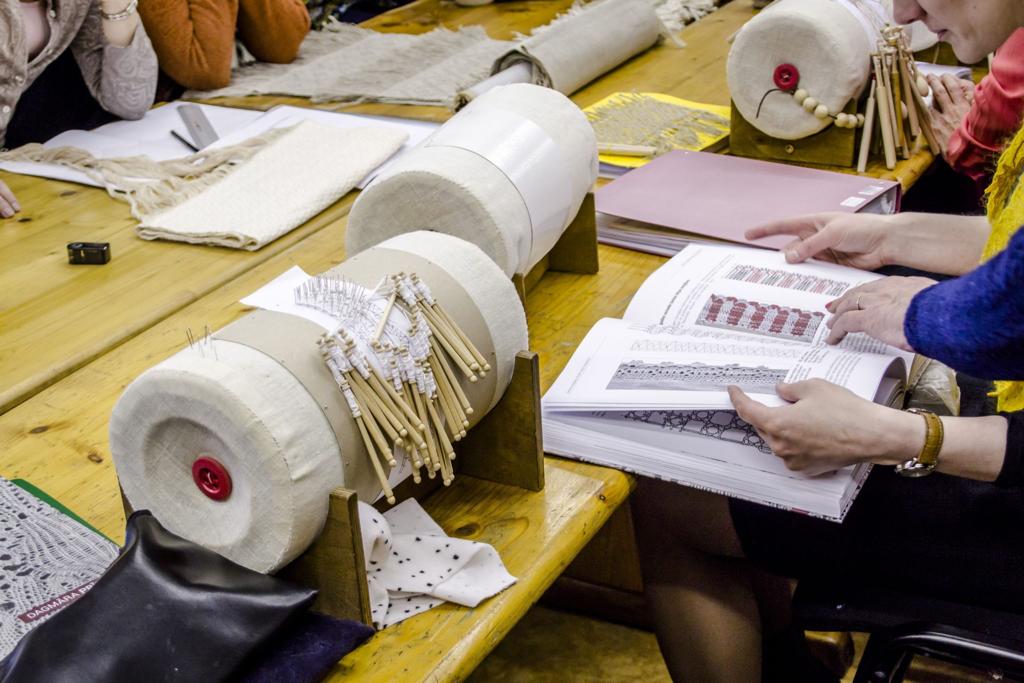
The photo shows the learning process. Photo by Sabine Indriksone-Moore
On intangible cultural heritage
Skills, experience and knowledge cannot be touched, so we call them intangible. But intangible heritage, as living heritage, cannot be separated from people's lives - when we work in the garden, cook and party, we often draw on family experiences without realising it. Intangible heritage is an important link for people to their families and communities, it gives us a sense of continuity and belonging. The existence of intangible cultural heritage is based on continuous practice and passing it on.....
In 2003, the CONVENTION FOR THE SAFEGUARDING OF THE INTANGIBLE CULTURAL HERITAGE (hereinafter "the Convention"), stresses that each State Party to the Convention is responsible for the safeguarding of the intangible cultural heritage and the preservation of cultural specificity as opposed to cultural standardisation. What UNESCO considers as intangible cultural heritage is "the customs, games and oral expressions, knowledge and skills, as well as the related instruments, objects, artefacts and cultural spaces that communities, groups and, in some cases, individuals recognise as part of their cultural heritage"…….
As of August 2020, 180 out of more than 200 world countries had acceded to the Convention. Latvia was the eighth country to accede to the Convention (14 January 2005)……..
UNESCO creates international inventories to promote the values of living cultural heritage and share experiences. .......
The implementation of the Convention in Latvia and the Latvian National Centre for Culture under its authority. In order to strengthen the implementation of the principles of the Convention at national level, Intangible Cultural Heritage Law. It was adopted on 29 September 2016. The Law provides for the establishment of a list of intangible cultural heritage of Latvia, which includes elements or values of intangible cultural heritage that are to be recognised as cultural heritage to be protected by the State and whose inclusion requires broad support and participation of the relevant community. Inventory of Iternagional Cultural Heritage The Latvian National List of Intangible Cultural Heritage is drawn up by the traditional communities themselves and the Council for Intangible Cultural Heritage, which assesses applications. From 2017 to 2022, 32 values have been included in the Latvian Intangible Cultural Heritage List......including the bobbing Skill in 2018.
*(Full information "About ICH" on the website of the Latvian National Centre for Intangible Cultural Heritage https://nematerialakultura.lv/en/ about bobbin lace https://nematerialakultura.lv/en/Elementi/knipelesanas-prasme-2018/)
The Book of Samples symbolises the passing on of the skills of the masters to future generations - to know, to preserve, to cultivate!
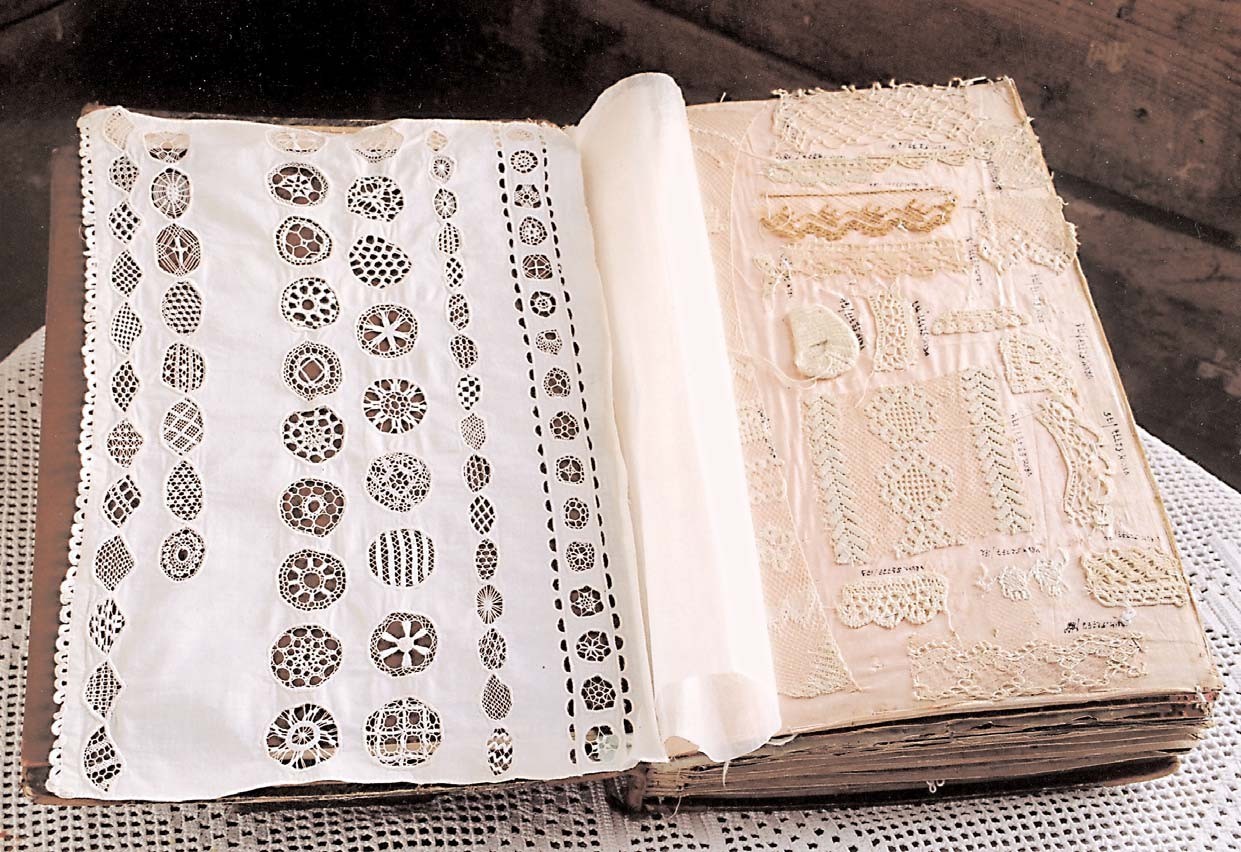
Specimen book, 19th century (collections of the Museum of the History of Riga and its Maritime Industry)


