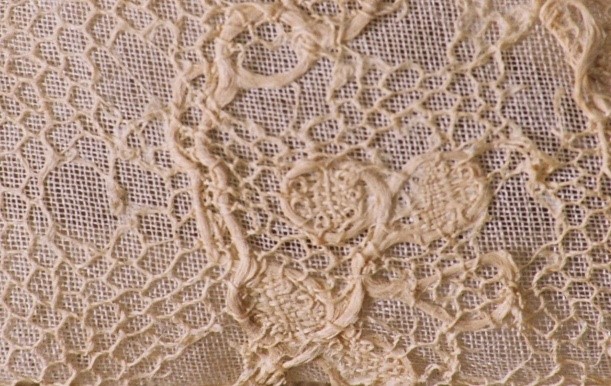
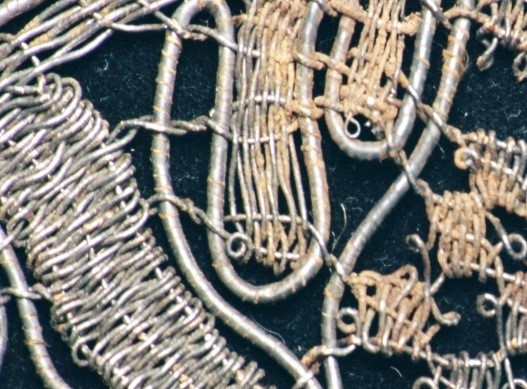
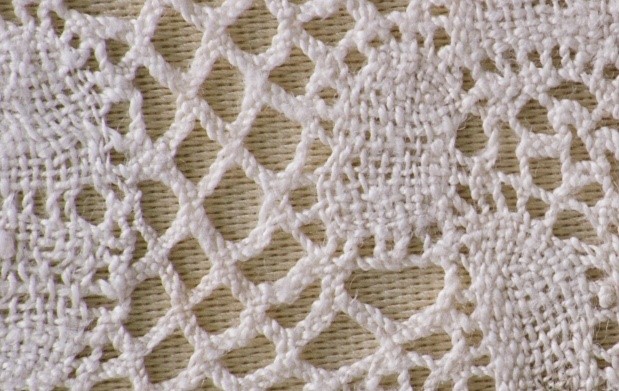
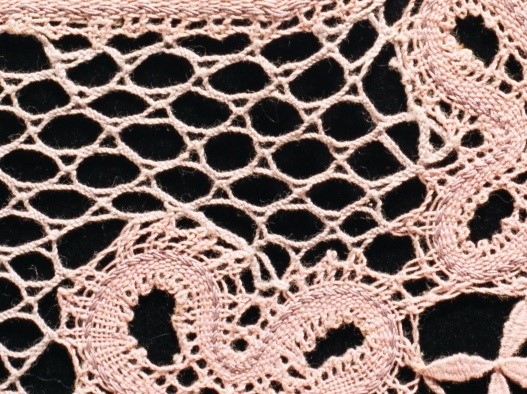
In the 16th, 17th centuries and later, silk, linen and metal threads were used to make lace. The materials influenced the shape, texture and quality of the lace. (Figs. 1-5). Lace made of gold and silver threads, mostly knitted, was made in many countries (Spain, Cyprus, Italy, France, Germany, Switzerland, Russia). This indicates that gold and silver were among the more widely used materials for lace making in 17th century Europe, including Latvia.
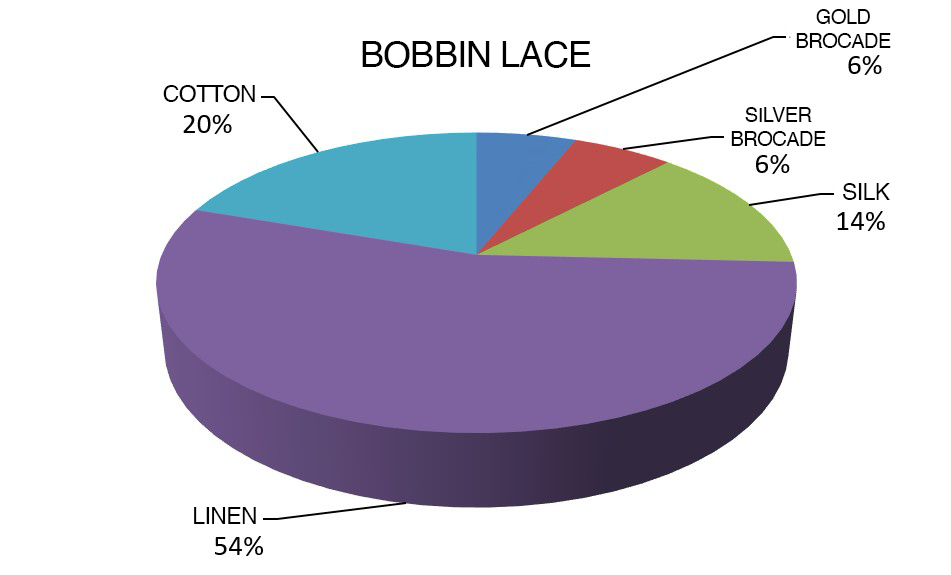
Figure 1 Materials used for knitting lace from the 17th century to the present
In Latvia, ethnographic lace was and is mostly made from linen threads, both in folk clothing and in decorations for household objects. It was not until around 1833 that cotton threads, which could be used for lace, began to be produced. As the quality of cotton yarns improved and they were cheap, cotton materials replaced silk and linen quite quickly. In the mid-20th century, lace was made from yarns in which artificial and synthetic raw materials were added in varying proportions to the natural fibres.
The material creates the texture of the lace and enhances the artistic expressiveness of the piece, which is why thread is of the utmost importance in lace making.