Experience has shown that folk art to a certain extent maintains boundaries against the novelties of civic fashion: ethnographic textiles and traditional decorative techniques only incorporate innovations that have already "stood the test of time". For example, local features such as ornaments in traditional Latvian textiles, including lace.
1.
2.
3.
Figure 5. Star (1. Ornament element - Star - Auseklis; 2. Fragment of an ethnographic blanket;
3.Bobbed Vidzeme women's hat lace fragment)
1.
2.
3.
4.
Figure 6. Grass snake (1. Ornament element - Zalktis - sign of Mara; 2. Glove pattern fragment; 3. Belt pattern fragment; 4. Fragment of a woman's headdress - bobbin lace)
1.
2.
3.
4.
Figure 6. Grass snake (1. Ornament element - Zalktis - sign of Mara; 2. Glove pattern fragment; 3. Belt pattern fragment; 4. Fragment of a woman's headdress - bobbin lace)
Latvian culture undeniably belongs to the cultural family of Western European nations, which is vividly evidenced by the selection of objects that demonstrate the influence of European artistic styles of various periods. At the same time, Latvian craftsmen are also working diligently to preserve and improve traditional methods of decoration and compositional techniques. This proves that nowadays, in Latvia, textile handicraft, including lace making, is characterised by both tendencies - the preservation of traditions and the influence of new fashion trends. Lace adorns people and the environment, bearing witness to the time in which it was used.
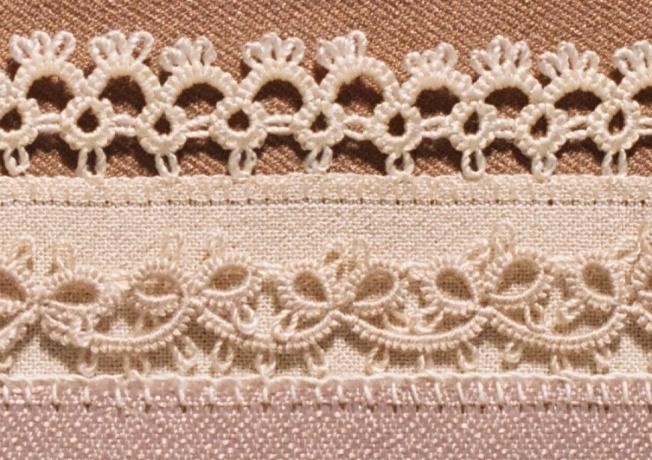
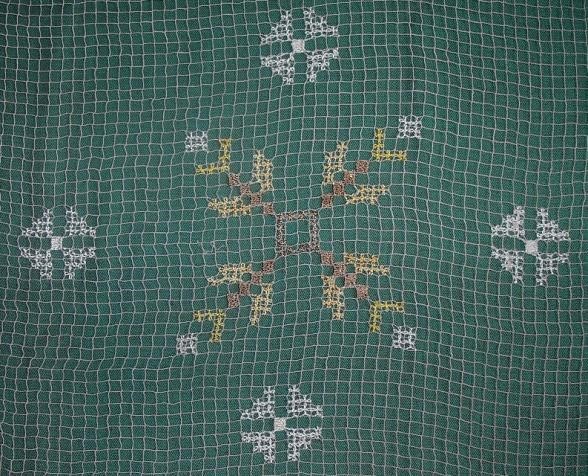
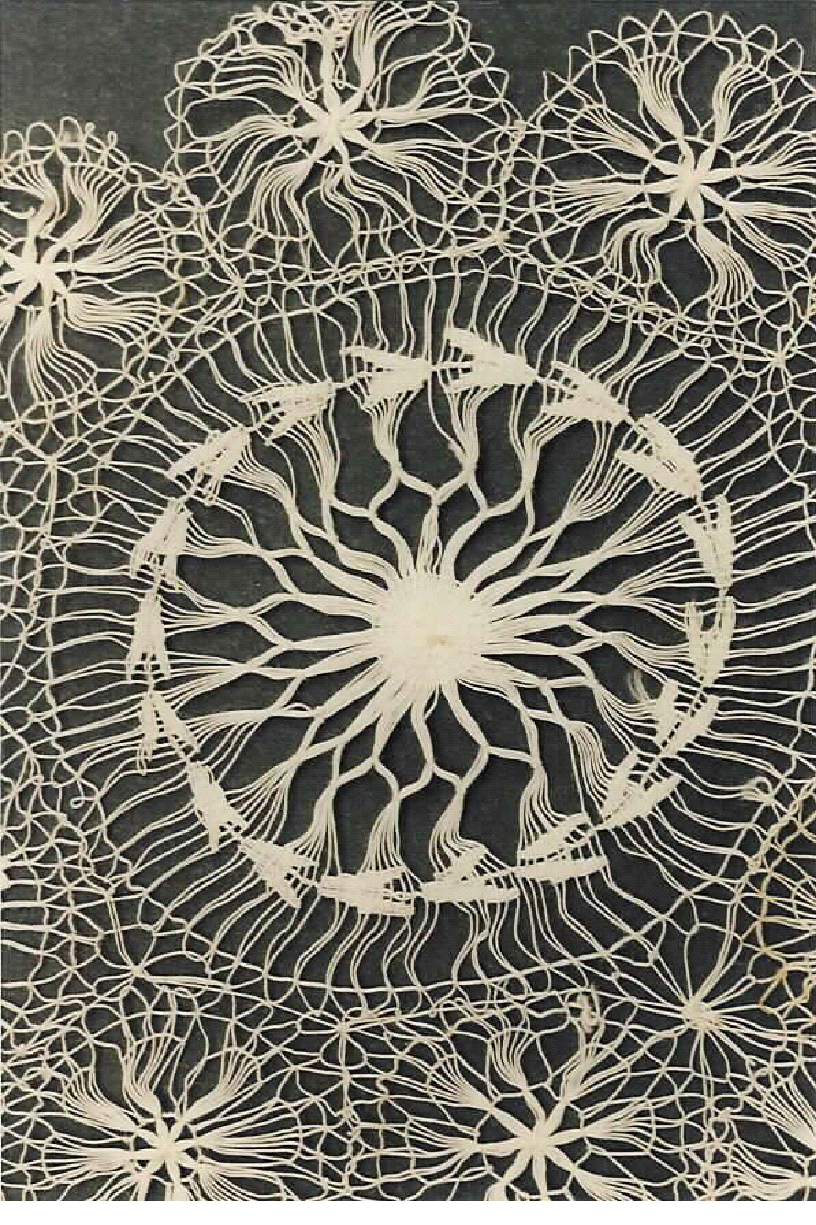
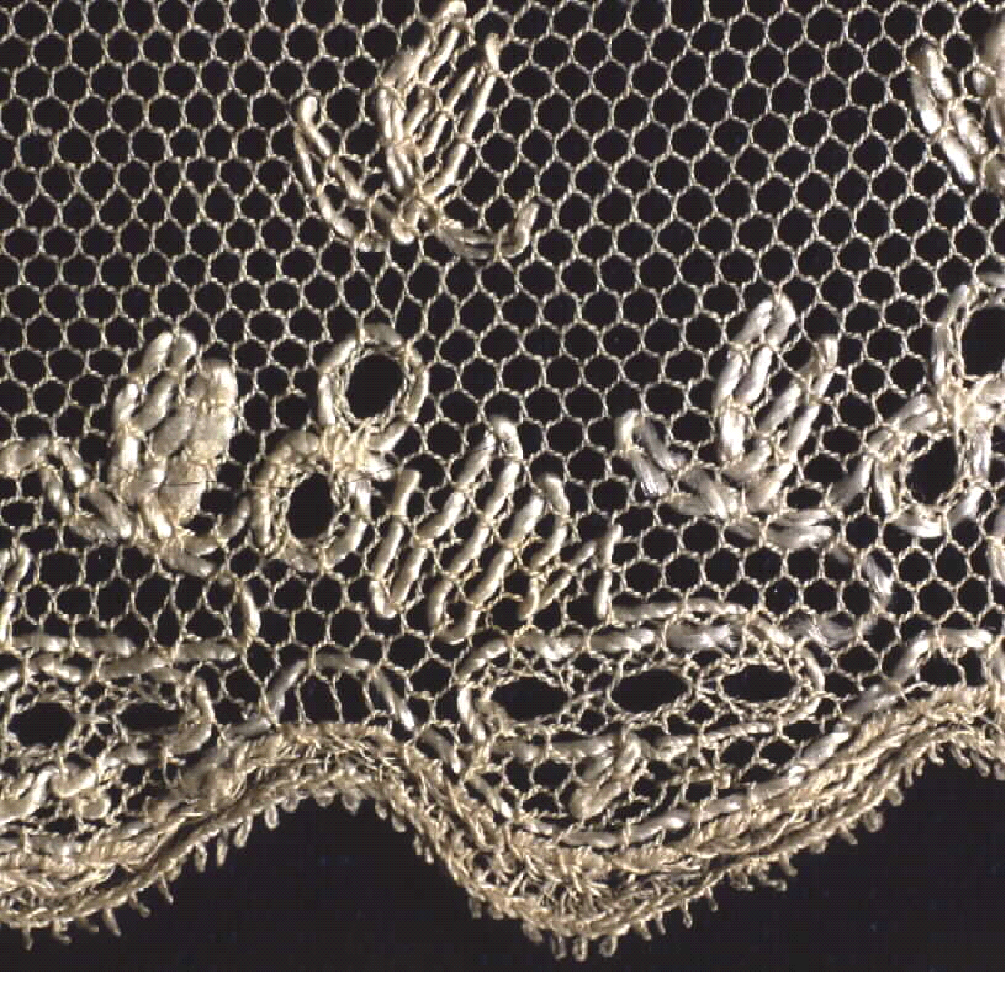
Lace is essentially a monochrome textile in which the main pattern-forming factor is the relationship of the dense element to the light, openwork element, as well as the possible shapes of the dense and light elements, determined by the technology of making and its associated specificities. Factors such as the order of threading or the structure of the weave must be taken into account when creating the pattern, e.g. the shapes made in the tatting technique are tiny and only curved, arched (Fig. 1). The Eyelets in the net lace are also tiny but only square (Fig. 2), filled with various pleated patterns, while the tulle eyelets are hexagonal (Fig. 4). The specific constraints of the weaving technique, such as the circle motifs in the tenerif lace (Fig. 3) or the subtle background net, influence both the shape and rhythm of the pattern and the compositional choices and solutions.